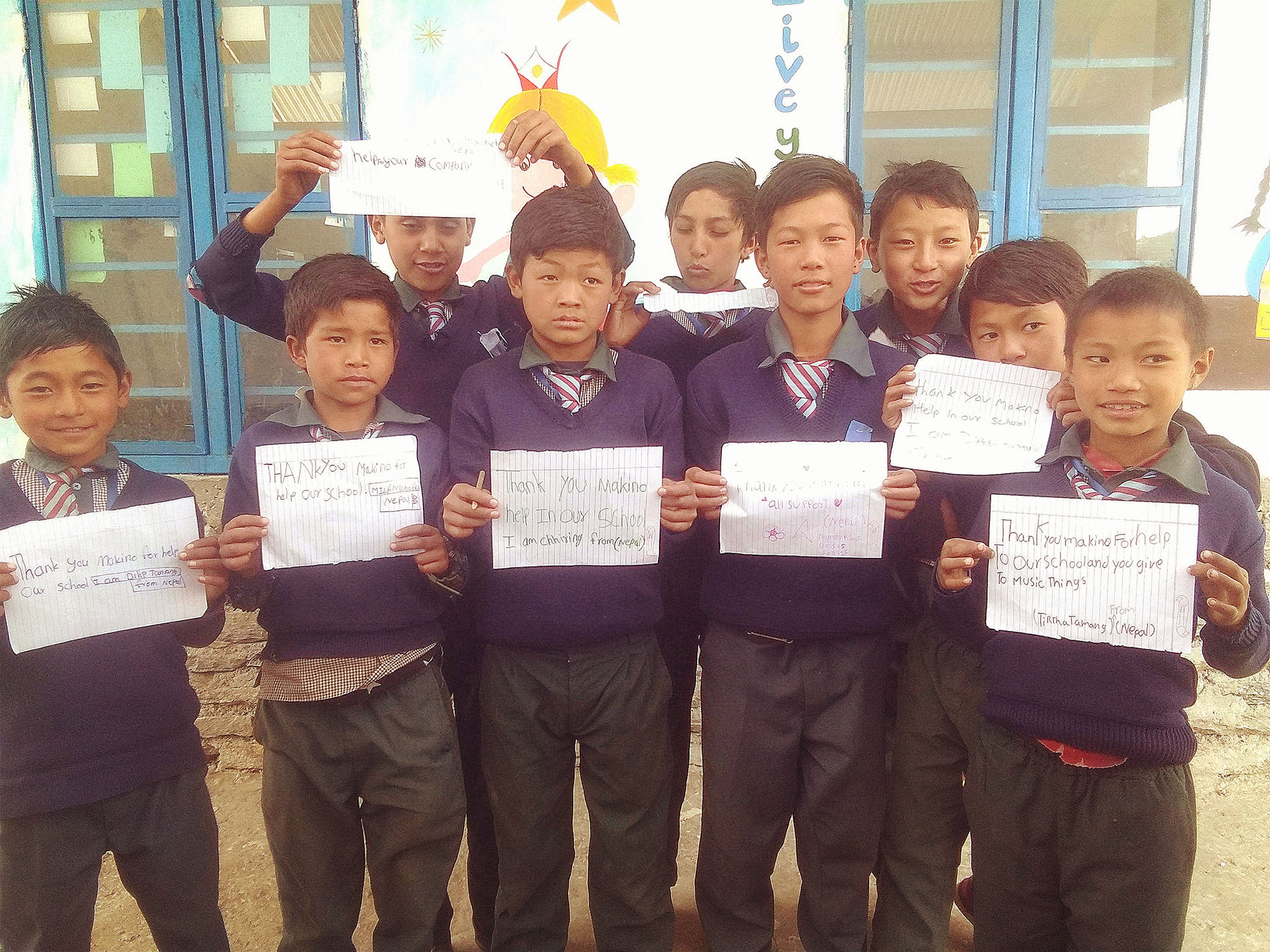
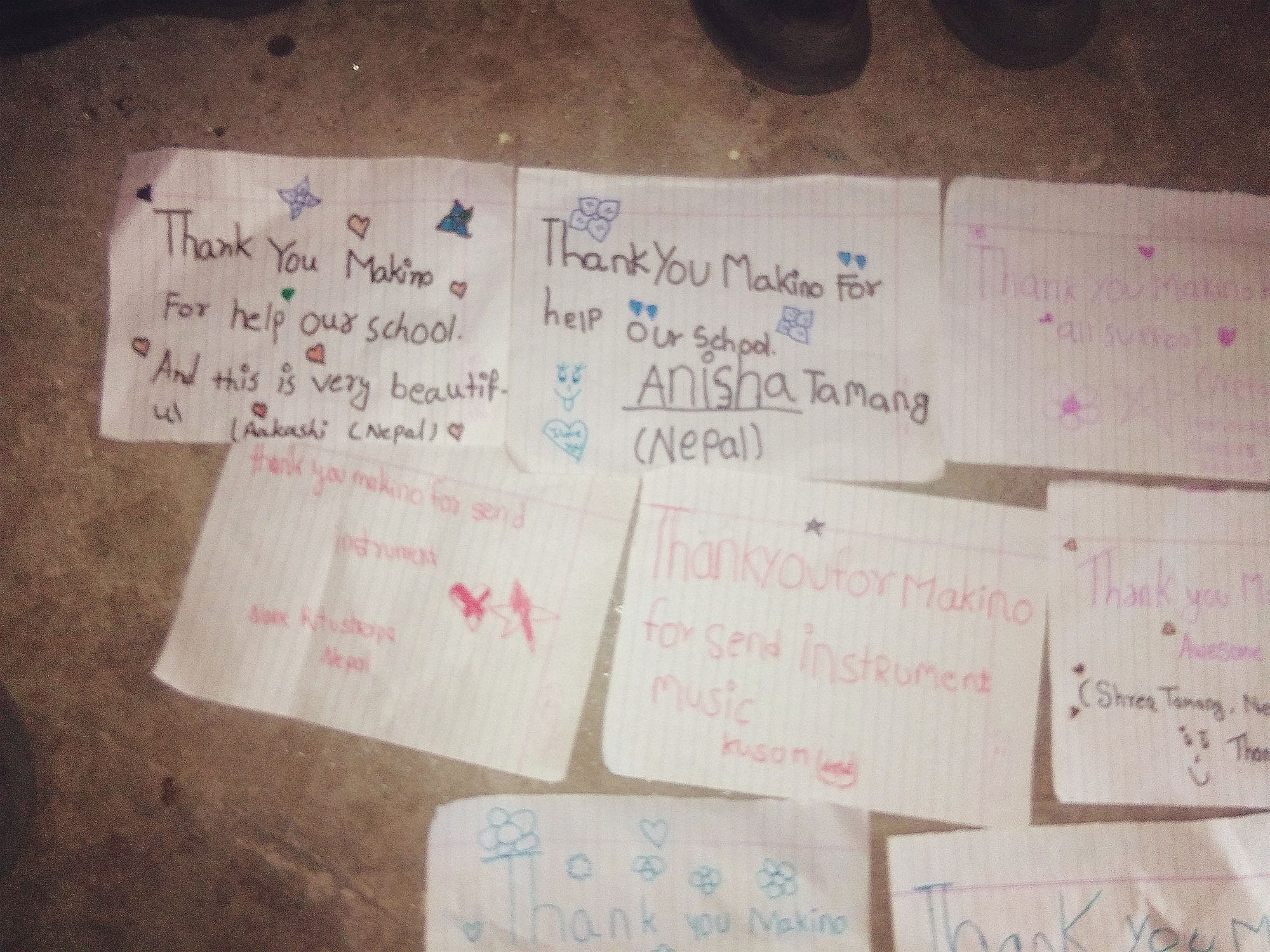
MAKINO Global Education Foundation (MGEF) is an international non-governmental organization set up by MAKINO(ASIA-PACIFIC)HOLDINGS Co., Ltd focusing on volunteer program featured by “Music Tree”, a program caring for pre-primary children growth. Bearing the belief that children should be endowed with the right of receiving education, MGEF has worked with international volunteers to conduct public welfare projects in China, Nepal, Cambodia, Thailand and etc., in the hopes of enabling children to receive quality general education. MGEF is formally established on 2nd February, 2020 after the preparation and trial operation of the projects lasting from March to December 2019.
UNICEF’s first global report on pre-primary education presents a comprehensive analysis of the status of early childhood education worldwide. It is noted that at least 175 million children – 50 per cent of the world’s pre-primary-age population – are not enrolled in pre-primary programs during these vital years, deepening inequalities and missing a critical investment opportunity. The report urges governments to commit at least 10 per cent of their national education budgets to scale them up. Such funding should be invested in pre-primary teachers, quality standards and equitable expansion, the report states.
The reasons for this urge are clear – a solid body of evidence shows that the foundations for learning are largely built in the early years of life, before a child ever crosses the threshold of a primary school. Children who fall behind in these early years often never catch up with their peers, perpetuating a cycle of underachievement and high dropout rates that continue to harm vulnerable young people.
One of the greatest challenges developing countries face is the need to staff the pre-primary subsector with teachers who can nurture a love of learning in young children. Qualified teachers are already in short supply, and yet a massive increase in their numbers is required as countries look to fulfill the promise of universal pre-primary education.
The pupil-teacher ratio is significantly lower among high-income (14 to 1), upper-middle income (17 to 1) and lower-middle-income countries (20 to 1) than in low-income countries, where it averaged 34 to 1 in 2017. Estimating the pupil-teacher ratio under universal coverage of pre-primary education – that is the total number of pre-primary-age children in a country against the number of pre-primary teachers currently in the system – points to one of the major challenges of the pre-primary education workforce. The average ratio of pre-primary-age children to teachers in low-income countries in 2017 then increases from 34 to 1 to 216 to 1.
Based on such grim situation, MGEF would like to offer a vital foundation for children’s learning and embark on the path towards quality general pre-primary education with the joint work by affectionate organizations and individuals. Many of our volunteers are professional pre-primary school teachers so they are more likely to teach children in a systematic way. If volunteers have little or even no backgrounds of pre-primary education, there is no worry because MGEF will provide multi-language early childhood systematic education contents named Music Tree for teachers. Through the comprehensive contents package including picture books, teaching courseware, teaching aids, guidance book and other paired materials, the volunteers will be able to conduct the class conveniently thus passing down knowledge, skills and values to children.
The China Development Research Foundation (CDRF) is a public foundation initiated by the Development Research Center of the State Council (DRC). Its mission is to advance good governance and public policy to promote economic development and social progress.
The Foundation has approached its mandate in a number of ways, including support for evidence-based policy research, leadership training, high-level forums and symposiums to promote economic cooperation and development, and the promotion of responsible public policy.
Mondo Challenge Foundation is a UK based charity that works to provide sustainable support for education and livelihoods in developing countries. We were established in 2004 and work primarily in NE India, Nepal and Tanzania. The wide range of projects we run with local partners help us address three of the UN Sustainable Development Goals, that of: Quality Education, Gender Equality and Decent Work & Economic Growth.
Mondo aims to provide high quality education for children in Indian, Nepali and Tanzanian communities; to enable livelihood opportunities within these communities; and to motivate the children to progress as far as possible with their education and contribute back to their communities.
The vision of Mondo is: long term sustainable communities enriched by quality education and livelihood opportunities
Santisuk Foundation is a Non-government Christian organization, a 528 Public Charity Organization of The Notification of The Ministry of Finance that functions as an intermediate center for people who have a desire to help and to channel love and care to the 1,100 poor and needy children living in the 40 slum communities in Bangkok and outlying areas. Their families are very poor and live their lives with a small and unstable income. The children really need help and support on their education.
The main purpose is to give hope and encouragement to these children. We also seek to develop these children to live their lives with dignity and quality. Eventually they will be able to take good care of themselves and support their family members in future.
Children’s Improvement Organization is a non profit/non government organization that was created to save the lives of homeless and severely underprivileged children in Cambodia.
CIO provides around the clock care for children who are unable to be cared for by their families. Some of the parents of the children are still alive, however they have become ‘orphans’ because of a range of factors, including poverty.
CIO is like a big family, and the children receive healthy meals, clothing, medical and educational support. Sitha and Sreymom also provide the children with the opportunity to develop skills which will assist them in gaining employment and/or attend university as they become adults.
Hebei University of Technology is a public university whose main campus lies in the Guangrong Dao neighborhood of the Hongqiao District in Tianjin, China. It is the first institute of technology in modern Chinese education history. It is among the first group of institutions of higher learning in the national “211-Project” to which priority is given in funding. It is also a Chinese Ministry of Education Double First Class Discipline University, with Double First Class status in certain disciplines.
Teaching Assistance Group of Graduates belonging to Hebei University of Technology has insisted on supporting education for a school in Guizhou Province for several years, which helps children to receive education year by year.