Teacher Professional Competence and Child Musical Development Observation Framework under Malaysia KSPK
Status
Research Team
Music Tree Malaysia Team
Timeline
2025-Ongoing
Project Overview
This framework takes Malaysia's Kurikulum Prasekolah 2026 (KP2026) as its formal curriculum reference. It integrates the Music Tree knowledge system, the IEDP teacher-development logic, and evidence from early childhood music education research to translate curriculum aspirations into classroom mechanisms that can be implemented, observed, and reflected upon.
It examines whether teachers create authentic opportunities for exploration, expression, and appreciation; how children participate through sound, movement, language, materials, relationships, and imagination; and whether teachers use evidence to adjust their next steps.
Key Research Questions
- How can early childhood music education knowledge be aligned with diverse national curriculum frameworks?
- What common principles and cultural differences exist in early childhood music education across countries?
- How can curriculum standards be translated into practical guidance for teachers?
- What professional competencies and child development indicators support high-quality music education?
- How can international perspectives and local practices work together to promote sustainable early childhood music education?
Research Output
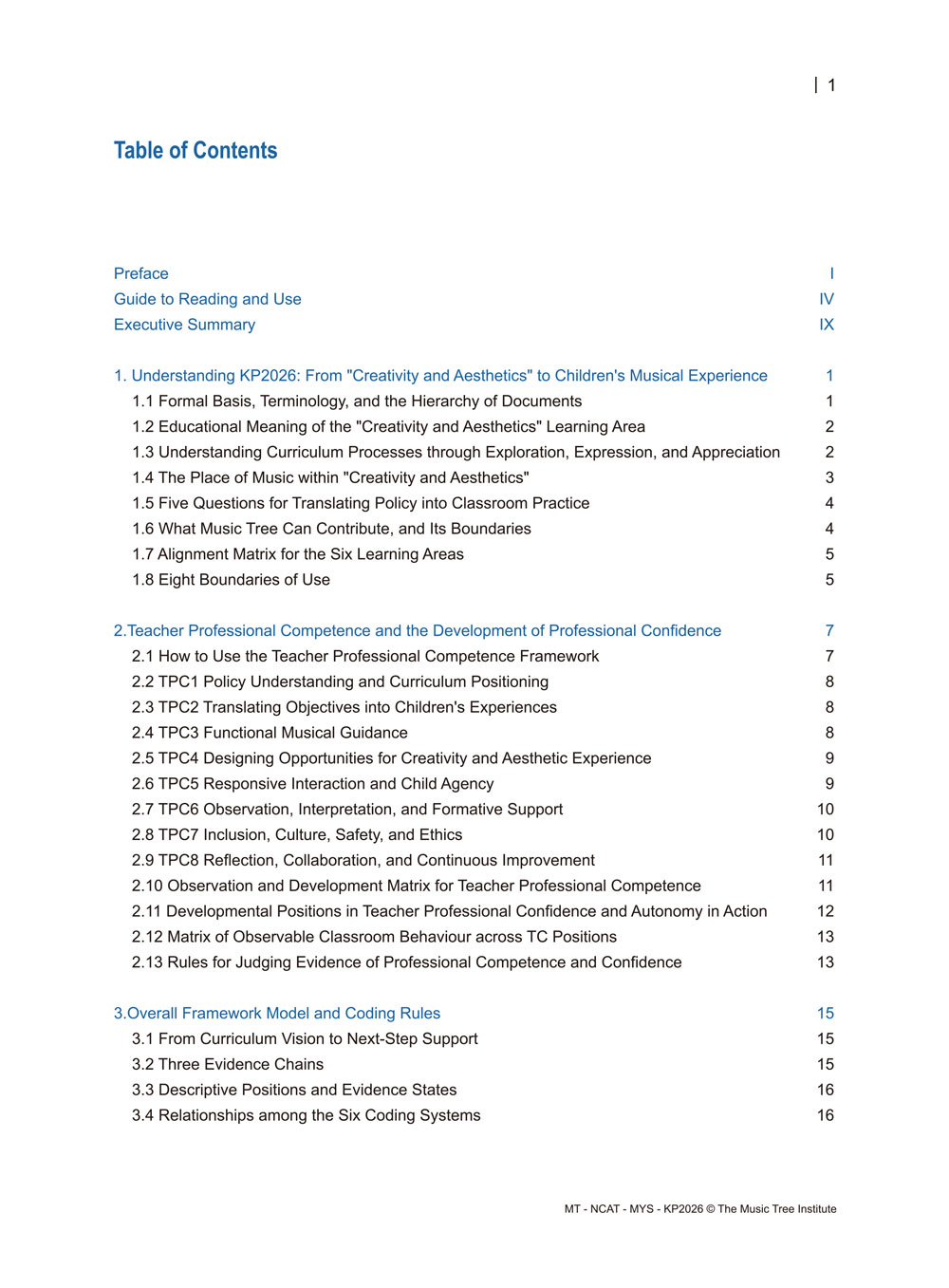
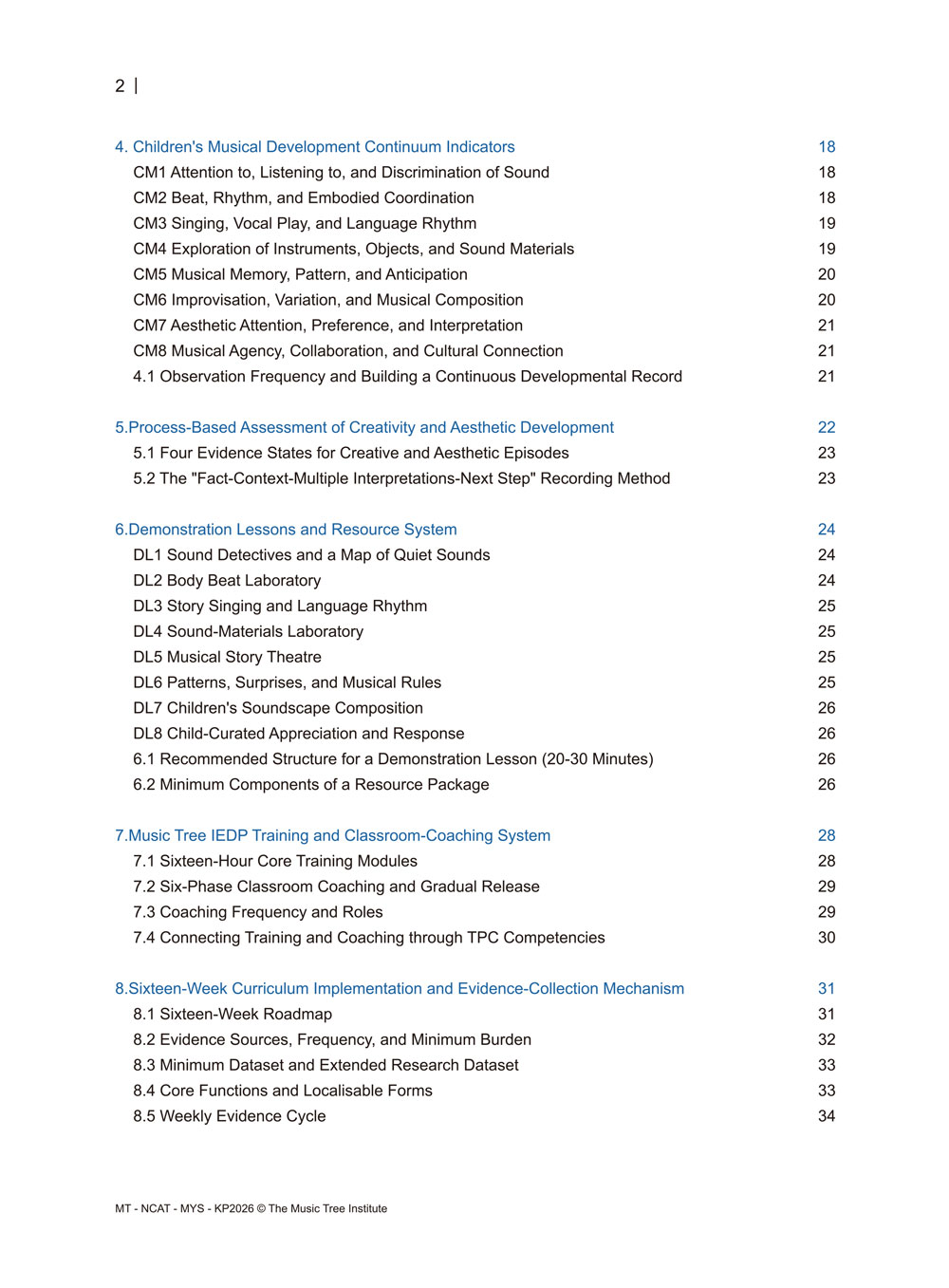
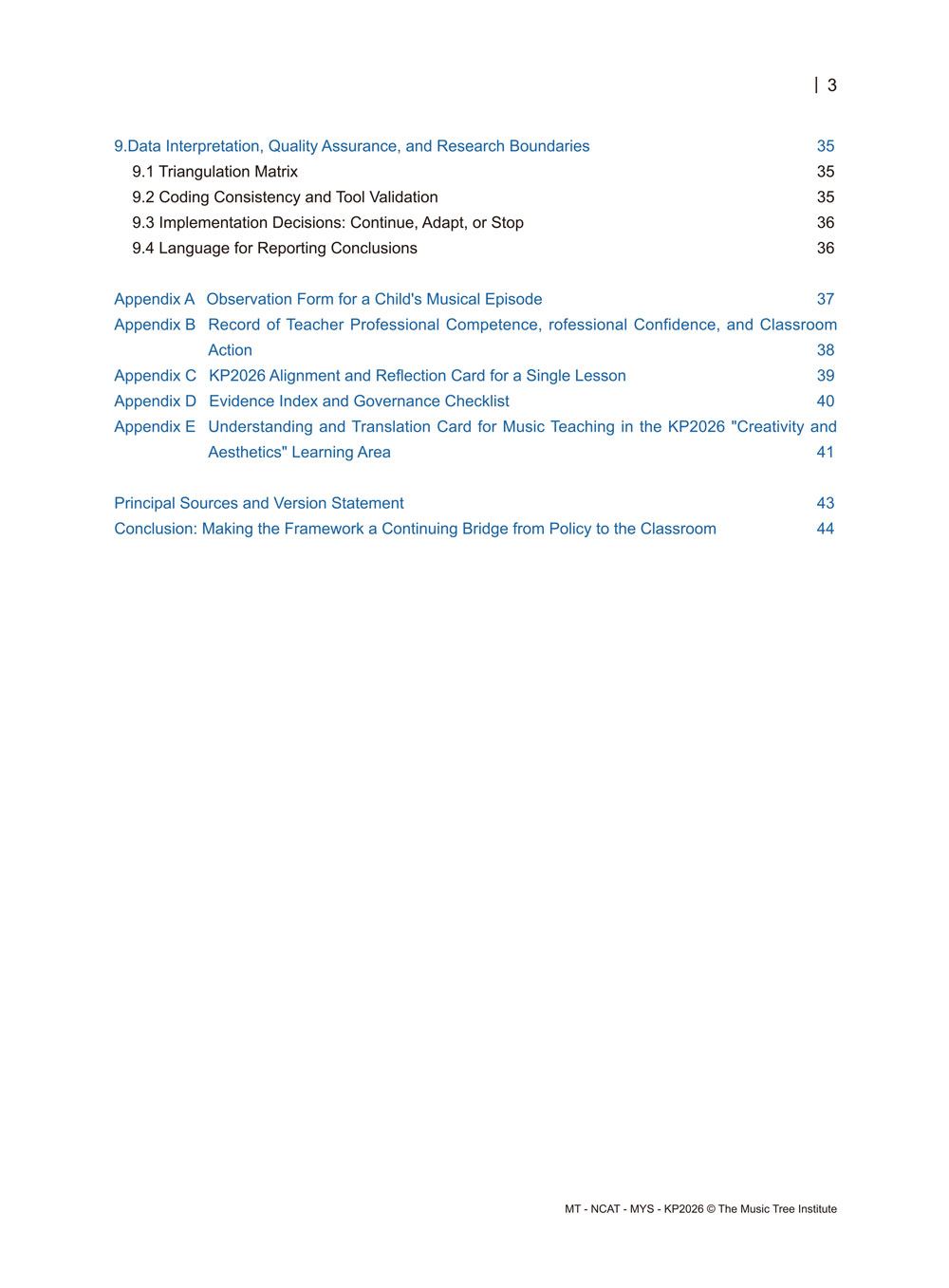
Teacher Professional Competence and Child Musical Development Observation Framework under Malaysia KSPK
Based on: Kurikulum Prasekolah 2026 (KP2026)
Purpose: To support Malaysian early childhood educators in translating national curriculum expectations into observable classroom practices and child development indicators.
- National Curriculum Analysis
- Music Education Alignment
- Teacher Competency Framework
- Child Music Development Indicators
- Classroom Implementation Guidance
- Observation Framework